Intra-port haulage
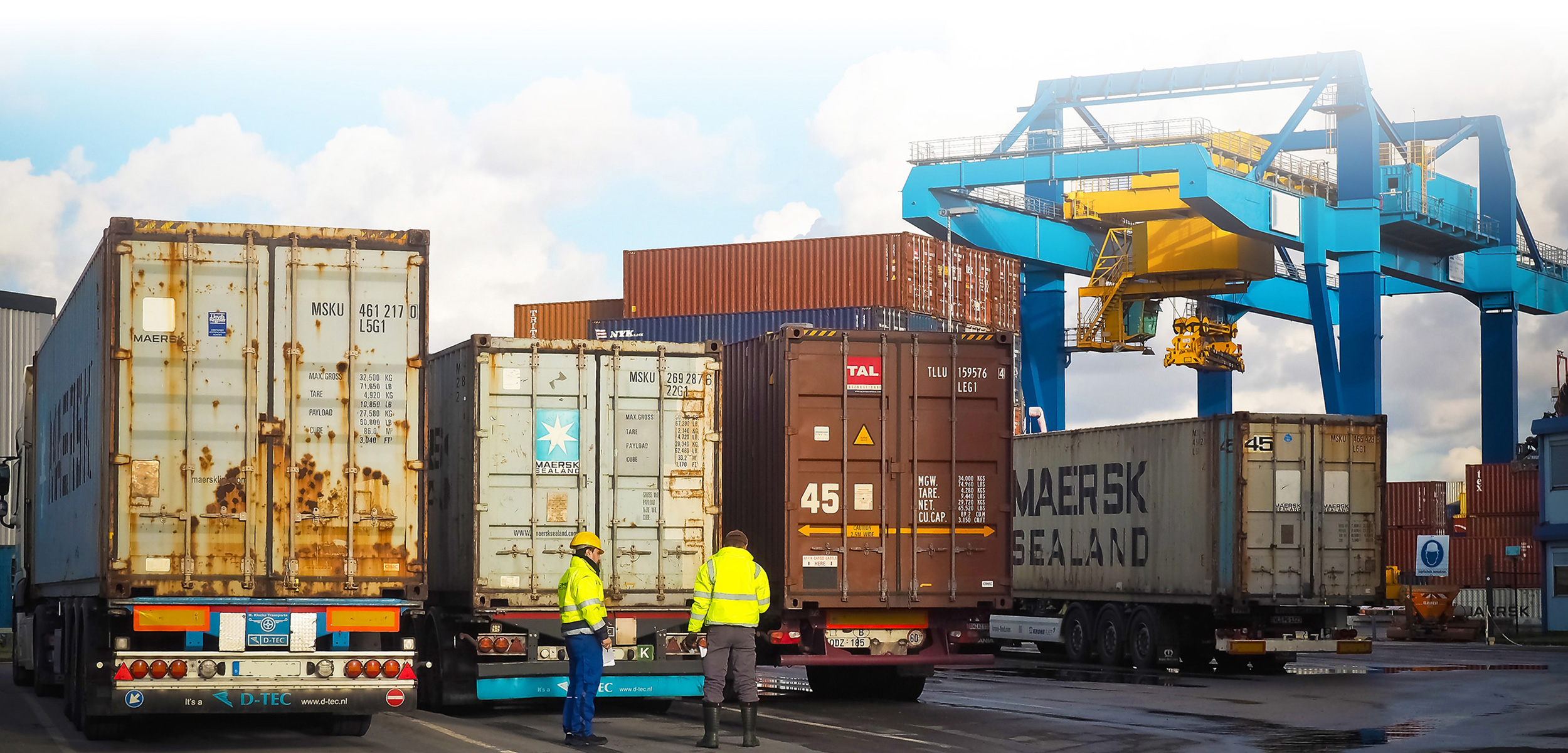
In multi terminal ports a lot of container haulage has to be done between the various container handling facilities. Conventional barging depends on the quayside cranes. Although the pure transport by simple barge is cheaper, the necessary double handling costs result in significantly higher overall costs than haulage by truck.
- read more
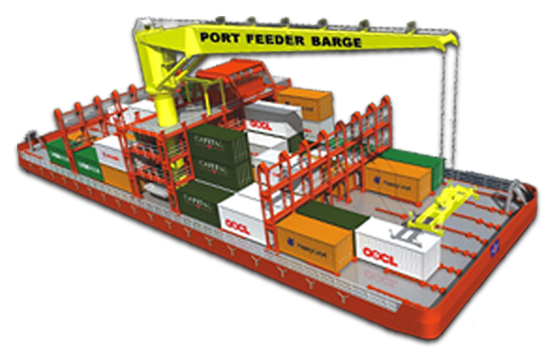
 The Port Feeder Barge is designed to shift intra-port haulage from road to waterway. This new type of harbour vessel of 168 TEU capacity is independent from quayside cranes due to its own full size container crane. Hence, compared to trucking the Port Feeder Barge can provide intra-port container haulage...
- at lower costs,
- carbon free,
- much faster when it comes to a huge number of containers at the same time,
- much easier and at less costs for oversized containers,
- more environmentaly friendly (with regard to all other components of diesel engine exhaust),
- much safer,
- without requiring personnel from the terminal,
- even if terminal gates are closed,
- without the need for any truck driver, who are in short supply in may places nowadays.
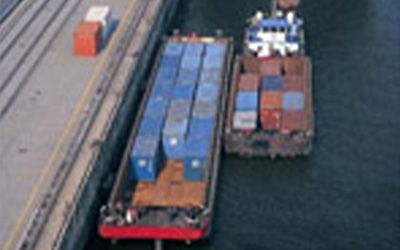
Floating terminal for inland barges
Valuable berth capacity for deep sea vessels should not be blocked by the small inland waterway vessels. They waste much time by hopping from terminal to terminal but carry only a few boxes! Moreover loading/ discharging the small vessels with the huge gantry cranes is anything else but adequate.
- read more
 Transhipment of ocean boxes to inland waterway vessels can be fully delegated to the Port Feeder Barge. In the course of its voyage throughout the port the Port Feeder Barge can distribute and can collect the containers from/for inland navigation. For ship-to-ship transfer operations not even a quay is required. Direct box transfer between the Port Feeder Barge and inland waterway vessels can take place midstream at the dolphins. Ocean terminals will be released from their obligation to serve the inland waterway vessels which in addition will benefit from a considerably reduced port stay.
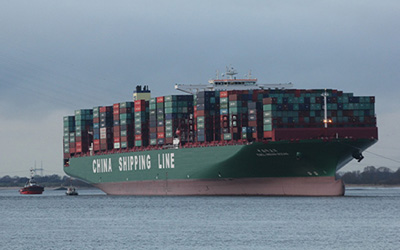
Salvage
After a grounding of a big containership necessary lightening operations are a challenge. Almost no port is really prepared and has suitable equipment available. For mega containerships it needs shallow draft floating cranes with a hook height of at least 55 m!
- read more
 An enlarged version of the Port Feeder Barge is even suited for lightening mega containerships.